

International Garden Festival — Domaine de Chaumont-sur-Loire, 2026 Edition
There are projects that shift perspectives.
Not simply because they are beautiful. But because they raise a question that had not yet been clearly formulated.
Rouge Baiser, the garden imagined by landscape architect Mélanie TANT for the International Garden Festival, is one of them.
A Garden Experienced Like a Film
The theme of the 2026 edition — “The Garden Goes to the Movies” — could have remained anecdotal. An invitation to play with cinematic codes and dress vegetation with film references.
Mélanie Tant transformed it into something else entirely.
In Rouge Baiser, visitors do not simply observe a garden. They move through it like a sequence of carefully composed cinematic shots.
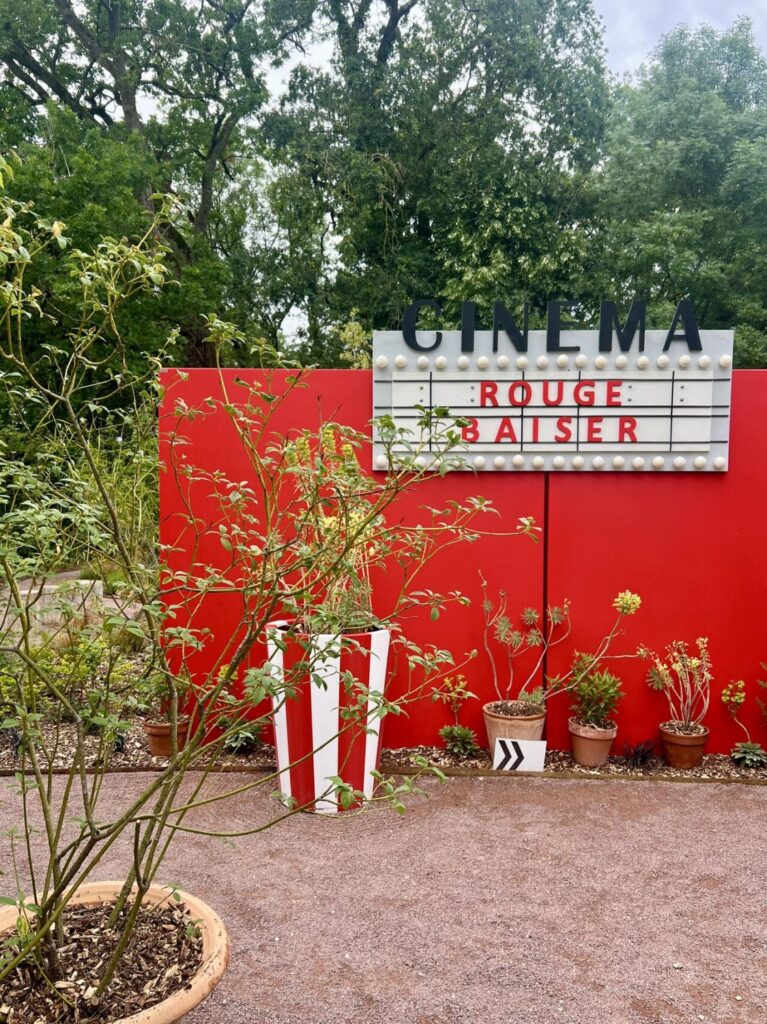
Three distinct scenes unfold one after another, each with its own atmosphere, colors, and emotional tone.
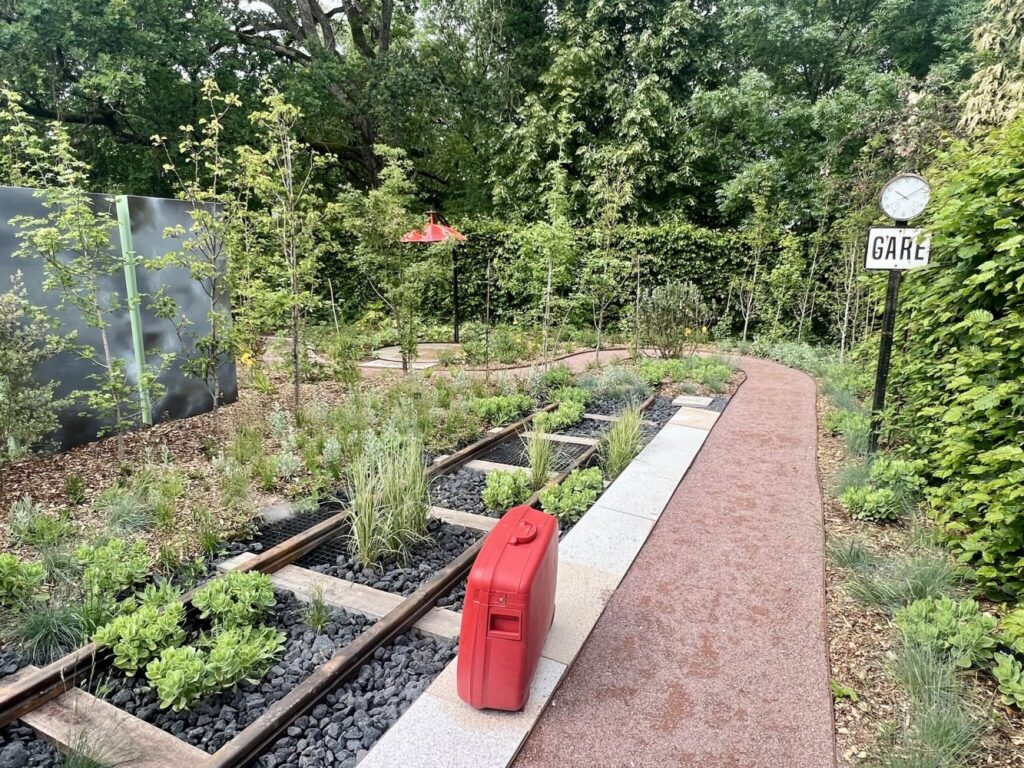
“Silver tones punctuated with crimson bathe a forgotten train platform in nostalgia,” evoking the emotional reunions of A Man and a Woman. Further on, “behind an enchanting veil of rain at the heart of rainbow-colored vegetation,” one can almost glimpse Gene Kelly in Singin’ in the Rain. Finally, “a flamboyant fresco in honey, copper, and ochre tones” recalls the prow of the Titanic and its grand, liberated love story.
Each scene is designed to reveal itself progressively. The eye is guided. Emotions follow one another. The garden becomes storytelling.
Constraint as the Starting Point for Creation
For this journey to work, each scene first had to exist as a truly distinct space. Mélanie Tant was looking for contemporary architectural elements capable of structuring her garden into several sections — much like film sets.
It was through this search that she turned to So Garden.
But a major constraint quickly emerged: the festival grounds did not allow any concrete foundations.
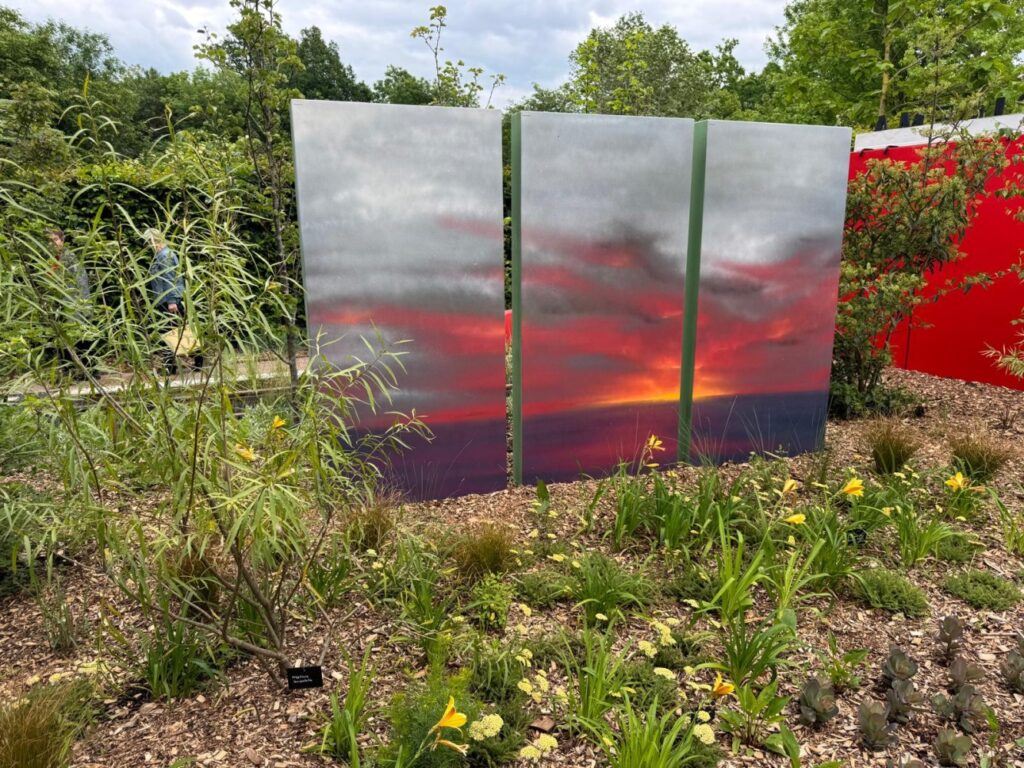
The walls therefore needed to be light enough to avoid this structural requirement, while remaining stable, durable, and visually flawless.
A Tailor-Made Solution Born from Dialogue Between Artisan and Designer
Rather than proposing a standard solution, the So Garden workshop developed a fixing system specifically for the project: a custom-designed metal base allowing the walls to be anchored into the ground through interlocking assembly, without any visible brackets.
The result: a completely invisible fixing system. No metal element disrupts the visual reading of the garden. The walls appear simply placed there — as though the architectural structure were entirely self-evident.
This detail — one that visitors will never consciously notice — illustrates better than any marketing argument what it truly means to work with a high-end artisanal workshop. The technical constraint did not limit creativity. It refined it.
The walls were crafted from hand-worked polyester fiberglass — a technique still relatively rare in the landscape world. This material offers designers a combination that is difficult to find elsewhere: lightness, weather resistance, freedom of form, and a wide range of finishes (stone effect, corten appearance, metallic finishes, RAL colors).
What This Reveals About the Evolution of the Profession
Rouge Baiser illustrates an underlying trend that many designers sense without always being able to name it clearly.
Contemporary gardens increasingly borrow from the codes of architecture, experiential design, and scenography. Clients now expect outdoor spaces to tell a story — to create a memory, a lasting emotion.
This requires landscape architects to work with an expanded palette: non-vegetal materials capable of enduring over time, artisanal partners able to respond to complex briefs, and above all collaborators capable of solving problems rather than simply delivering products.
The boundaries between landscape design, architecture, immersive art, and experiential design are becoming increasingly porous. And it is precisely on this frontier that So Garden is building its positioning — not as a supplier, but as a creative partner capable of transforming constraint into elegant solutions.
A Collective Work, As Always
Rouge Baiser reminds us of what all great landscape achievements share: they are always the result of a collective adventure.
Behind Mélanie Tant’s vision stand Albéric Ibled (So Garden), Jérémy Gougeon (Effivert), Yoann Bouvier (Arbora), Guillaume Delapierre (Pépinières du Val d’Erdre), Thierry Gourio (Archimadefolies, umbrella structure), and Jacques Chevalier (water feature engineering).
Together, these different crafts transformed emotion into inhabitable space.
Perhaps this is what contemporary landscape design is at its most demanding and inspiring: inviting someone into their own inner film.
Want to Experience It?
Rouge Baiser and the thirty or so ephemeral gardens of the 2026 edition are open to visitors until November 1st, 2026, at the Domaine de Chaumont-sur-Loire.
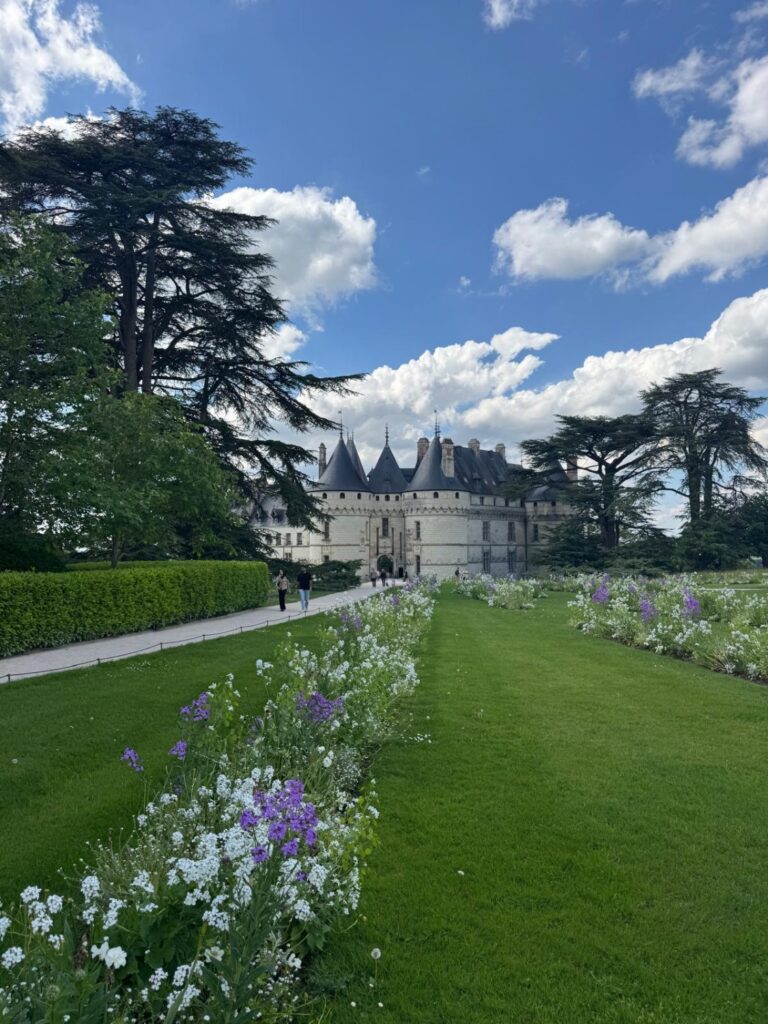
The Domaine itself is an exceptional setting: 32 hectares overlooking the Loire Valley, a château dating from the 15th to the 19th century steeped in history — once home to Catherine de Médicis and later Diane de Poitiers — an English-style landscaped park designed by Henri Duchêne, and since 1992, one of the world’s most respected laboratories for contemporary garden and landscape creation.
Perched 40 meters above the wild Loire River, a UNESCO World Heritage site, less than two hours from Paris, it is a destination well worth the journey.
Allow a full day to explore the festival, the contemporary art installations, and the château itself. 🌐 domaine-chaumont.fr
Have you visited Rouge Baiser or other gardens from this year’s edition? Share your impressions in the comments.